Podcasts have come a long way from two people sitting behind microphones having a conversation.
Today, many are professionally filmed, with multiple cameras, studio lighting and production teams. A single interview can generate hours of footage and dozens of clips that are subsequently shared across YouTube, LinkedIn, Instagram and other platforms.
For business leaders, entrepreneurs and industry experts, a podcast appearance is an excellent opportunity to build credibility, share expertise and reach a new audience.
Naturally, most guests put considerable thought into what they’re going to say. They research the host, consider their key talking points, and perhaps even rehearse a few answers.
But there’s another aspect of preparation that’s often overlooked.
How are you going to look on camera?
Now, I’m not suggesting everyone needs to arrive at a podcast studio looking as though they’re about to present the Oscars – quite the opposite, actually – but there’s a considerable difference between looking natural on camera and simply turning up as you are.
And when that footage could be circulating online for years, it’s worth giving some thought to.
Your appearance communicates before you say a word
We make assumptions about people based on how they present themselves. No, it’s not always fair, and no, those assumptions aren’t necessarily accurate, but appearance does influence first impressions – fact.
Think about the difference between someone wearing a sharply tailored suit and someone in a relaxed linen shirt. Or a sleek, structured hairstyle compared with something softer and less formal.
Neither is inherently better. They simply communicate different things.
The same applies to hair and makeup style.
A polished, structured hairstyle might reinforce an impression of authority and precision. Softer styling can feel more relaxed and approachable. Makeup can subtly change the emphasis of someone’s features, creating a more defined or understated appearance.
Of course, none of this should be taken as a rigid set of rules. A CEO doesn’t need a severe haircut to be taken seriously, and an entrepreneur doesn’t need to look permanently windswept to appear creative, but the question worth asking is:
What impression do you want to create, and does your appearance support it?
You might be the CEO of a large organisation but want to come across as warm, open and approachable. Equally, you might be a creative founder looking to establish greater authority in your industry.
Your hair, makeup and clothing should work together to communicate something that feels authentic to you.
It’s a consideration that’s particularly relevant to podcasts, where the audience is often getting to know the person behind the job title.
Podcast makeup is different from corporate headshot makeup
Although both involve cameras, the requirements are slightly different.
A corporate headshot is a controlled environment. The photographer can adjust the lighting, position the subject, check the composition, and capture a relatively small number of carefully considered images.
A podcast is a moving conversation.
You’re turning your head, laughing, reacting, drinking water, and speaking for anything from 30 minutes to several hours.
The camera may be filming continuously, and there isn’t necessarily someone checking your appearance between takes.
That changes how we approach the preparation.
For a podcast, I generally favour a natural, polished finish that holds up under studio lighting without looking overly made up.
Skin should look even, with shine controlled where necessary. Features need enough definition to register on camera, but nothing should distract from the conversation.
Hair needs to be comfortable, secure, and able to withstand movement without requiring constant attention.
And longevity matters, because a hairstyle that looks fabulous for the first ten minutes but gradually collapses throughout a two-hour interview isn’t particularly useful, is it?
If you’re organising a larger production, our guide to planning hair and makeup for corporate filming covers the practical considerations for production teams.
The filming environment makes a difference
Before a client’s appointment with us, we’ll often look at the podcast or production itself.
Is it filmed in a professional studio or a more informal setting? Is the lighting bright and direct, or softer and more atmospheric? Will the guest be sitting under warm lights for several hours?
These details help us decide how much preparation is appropriate.
For example, someone appearing in a brightly lit studio may need more attention to shine control than someone recording in a softly lit room.
Similarly, the level of makeup appropriate for a highly produced business interview may be different from that of a relaxed conversational podcast.
There’s no universal podcast makeup look, which is precisely why understanding the production is important.
“I don’t want to look like I’m wearing makeup”
This is probably one of the most common things we hear from corporate clients.
And it’s one we’re very comfortable with.
Recently, I looked after a business speaker who had flown into London from Singapore. She had a full day of meetings before appearing on stage that afternoon and specifically requested a natural, minimal makeup look.
Her priority was good skin, hair that would last, and an appearance that felt entirely like her.
Interestingly, she’d been looking for an artist who understood corporate work rather than somebody who would automatically approach the appointment as bridal makeup.
It’s an important distinction.
Professional makeup doesn’t have to be glamorous, dramatic, or particularly noticeable.
In corporate environments, we’re often doing what I would describe as corrective makeup: evening out skin tone, reducing redness, softening dark circles and introducing subtle definition.
The objective isn’t to change someone’s appearance.
It’s to ensure that the camera isn’t unnecessarily emphasising something that would barely register in person.
And for clients who rarely wear makeup, the result should feel comfortable as well as look natural.
There’s very little point in creating a technically beautiful face if the person wearing it spends the entire interview feeling self-conscious – in defeats the whole purpose!
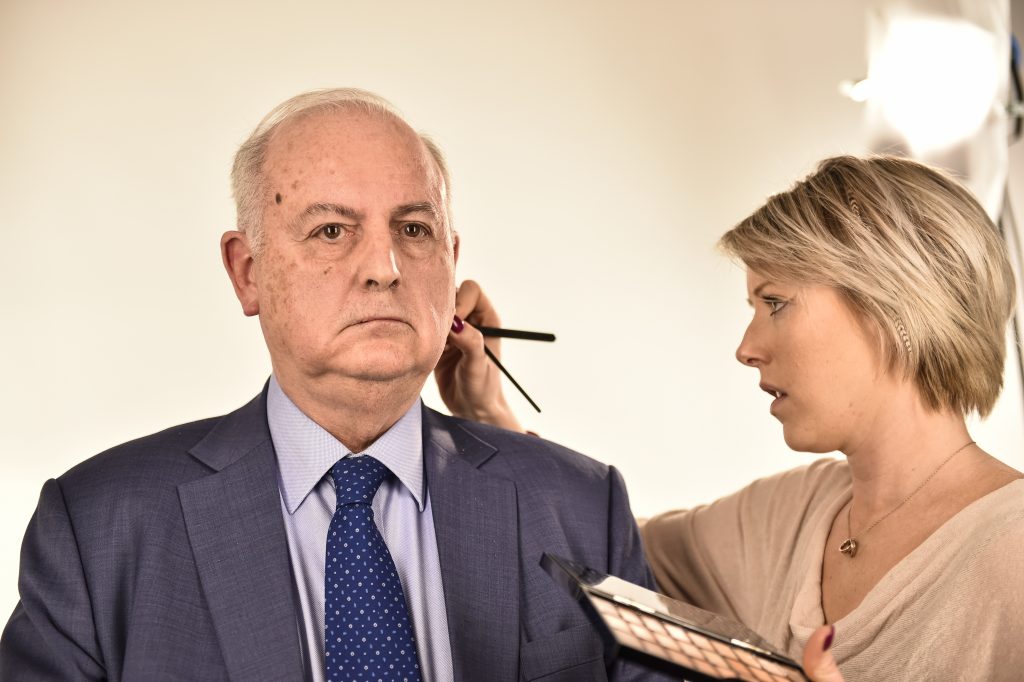
Men’s grooming for podcasts: arguably even more important
Men are often overlooked when it comes to professional hair and makeup, particularly outside television and film.
Which is rather odd when you consider how much of today’s business content is filmed.
A male CEO might spend considerable time preparing for a high-profile podcast appearance, yet give very little consideration to how he’ll look under studio lighting.
And trust me, the camera isn’t particularly forgiving of a sleepless night.
Dark circles, redness, blemishes, and excess shine can become even more noticeable on screen.
Professional grooming addresses these things without making someone look as though they’re wearing makeup.
For men, a typical appointment might include skin preparation, discreet corrective makeup, shine control, and hair styling or tidying.
The difference can be quite significant, particularly in close-up shots.
And because the makeup is applied specifically for camera, it should remain virtually undetectable.
We’re not attempting to make someone look ten years younger or transform their appearance. We’re simply ensuring they look rested, polished, and professional.
For straightforward men’s grooming, we’d generally allow around 30 minutes, although more extensive requirements may take longer.
Given the longevity of podcast footage, I’d argue it’s a worthwhile consideration for any man making an important on-camera appearance.
Looking good and feeling prepared aren’t entirely separate things
Having worked with speakers, presenters and corporate clients for many years, I’ve noticed something interesting about the effect of professional hair and makeup.
It’s not simply that people are pleased with how they look; it’s that their whole demeanour often changes. They sit a little straighter, appear more relaxed, and seem more comfortable taking up space.
I recently worked with speakers at a multi-day corporate event, several of whom commented on the difference their hair and makeup had made to their confidence.
It makes sense.
When you’re preparing for a public appearance, there are plenty of things competing for your attention. You might be thinking about what you’re going to say, how you’ll answer a difficult question, or whether you’ll remember an important point.
If you’re also worrying about your appearance, that’s another unnecessary distraction.
Having someone take care of it professionally means there’s one less thing to consider and that can make a difference to how comfortably you communicate.
The conversation in the makeup chair
There’s another part of my work that I find particularly interesting.
While I’m preparing someone for a speaking engagement or interview, we’ll inevitably have a conversation.
I’ll ask about their work, how they got into their industry, what they’re speaking about, or what they’re hoping to achieve.
Partly because I’m interested – I’ve met some fascinating people through my work – but I’ve also noticed that these conversations can be surprisingly useful for the person about to go on stage or camera.
When somebody starts recounting their professional experience, discussing their achievements or explaining the work they’ve done, they’re effectively reminding themselves of their own expertise.
It’s a subtle thing.
I’m not sitting there delivering motivational speeches or telling them how wonderful they are. We’re simply having a conversation… but by the time they leave the chair, they’ve often spent half an hour talking confidently about the very subject they’re about to discuss publicly.
Alongside feeling more comfortable with their appearance, it’s a rather good way to prepare for an interview.
And considerably more enjoyable than sitting alone rehearsing answers while worrying about whether you’ve got something in your teeth.
Should podcast studios provide hair and makeup?
Ideally, yes. Particularly for productions regularly interviewing senior executives, public figures and industry leaders.
In practice, however, professional hair and makeup isn’t always included.
Larger productions may have artists available, but many podcast studios operate without dedicated grooming support.
For guests, this means it’s worth checking with the producer before your recording.
If hair and makeup isn’t provided, you can arrange your own artist to prepare you at home, in your office, at a hotel or at the recording location.
At CJC Hair & Makeup, we provide mobile hair, makeup and grooming services throughout London.
For women’s hair and makeup, we’d typically allow approximately 60–90 minutes, depending on the styling required. Men’s grooming generally takes around 30 minutes.
We have a minimum booking fee, so we’ll always discuss the requirements and provide a quotation beforehand.
For podcast producers and production companies, we can also provide regular grooming support or work as a preferred supplier for visiting guests.
It’s particularly useful when a production involves multiple contributors, executives, or presenters who need to be prepared within a specific filming schedule.
A final thought: the camera is there to capture you, not your makeup
There’s a temptation to think that looking good on camera means looking more polished, more glamorous, or somehow different from how you normally appear.
I don’t agree.
The best results come from understanding the individual, the environment and the impression they want to create.
Sometimes that means carefully styled hair and a little more definition in the makeup.
Sometimes it means ten minutes spent correcting a few blemishes and removing shine.
And sometimes it means doing very little at all.
The point is that the preparation should support the person and the purpose of the appearance.
If you’re appearing on a podcast, your expertise should be the most interesting thing about you. Your hair and makeup simply need to make sure nothing gets in the way.
Professional hair, makeup and grooming for podcasts in London
CJC Hair & Makeup provides professional hair, makeup and grooming for podcast guests, business leaders, executives, speakers and presenters.
Whether you’re preparing for a high-profile interview, filming a series of episodes or producing a corporate podcast, our experienced team can provide natural, camera-ready styling at your chosen London location.
Get in touch to discuss your upcoming recording or production requirements.
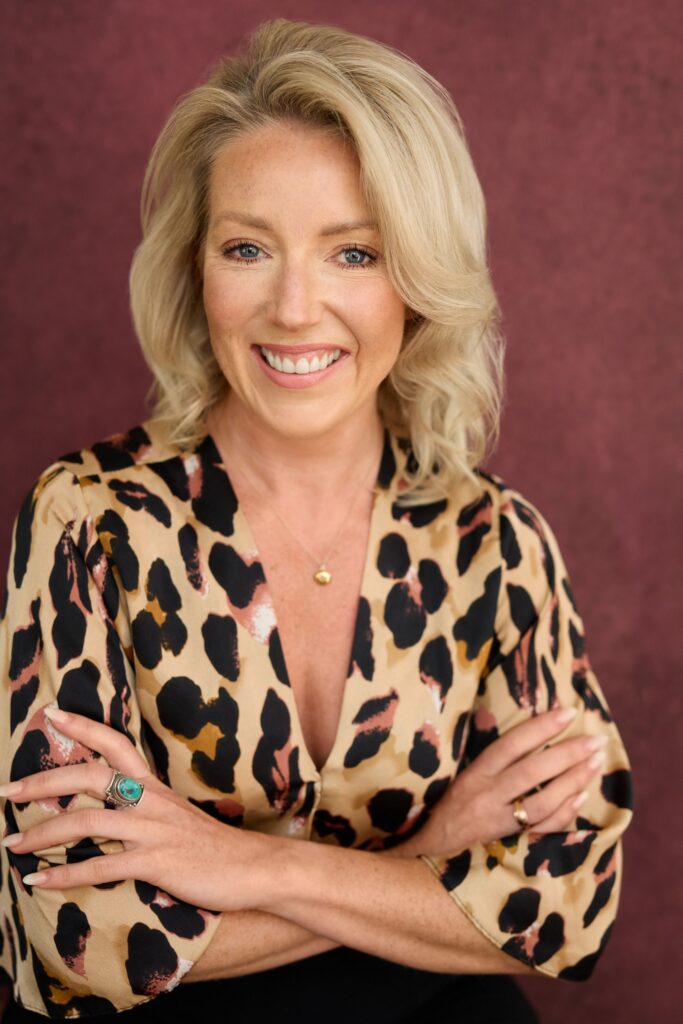
By Camilla Collins.
Camilla Collins is the founder of CJC Hair & Makeup, leading a team of experienced hair and makeup artists working across corporate production, weddings, events, TV, film and live appearances.
With more than 15 years of industry experience, Camilla specialises in the relationship between appearance, confidence and how people show up when it matters.