When planning a corporate conference, there’s an extraordinary amount to coordinate. Speakers, schedules, AV, lighting, staging, rehearsals, catering, guest lists… and of course the inevitable last-minute changes that are a part of every event!
Hair and makeup is more often than not fairly low down the priority list – I mean, how complicated can it be to get a few people looking presentable before they walk on stage?
Well, it’s not always as simple – or as quick – as you might think.
I’ve spent many years preparing speakers, presenters and executives for conferences, livestreams and corporate events and I’ve seen how much difference good preparation makes — I’ve also seen how quickly things can unravel when practicalities haven’t been considered.
The frustrating part is that most problems are avoidable, and that’s what has led me to write this post today.
Why professional hair and makeup matters for corporate speakers
Corporate hair and makeup isn’t about making everybody look glamorous – it is more often quite the opposite.
Speakers generally want to look like themselves, with a little extra polish. They want to feel comfortable, look professional so they can get on with delivering their presentation without worrying about their appearance.
But stage aside, there’s also the question of how they’ll appear on camera.
Even when an event isn’t being broadcast, speakers are frequently filmed or photographed. Many conferences use large screens displaying close-ups of whoever is on stage, while recordings and social media clips may continue circulating long after the event.
Professional hair and makeup helps ensure that someone’s appearance works both for the audience in the room and for the camera… but there’s another benefit that’s less obvious.
A speaker who’s comfortable with how they look has one less thing to worry about before stepping on stage.
And when you’re about to address several hundred people, that’s no small advantage!
Different stages call for different approaches; there’s no single formula for corporate speaker hair and makeup. The right approach depends on the event, the lighting, the cameras, the audience, and, most importantly, the individual.
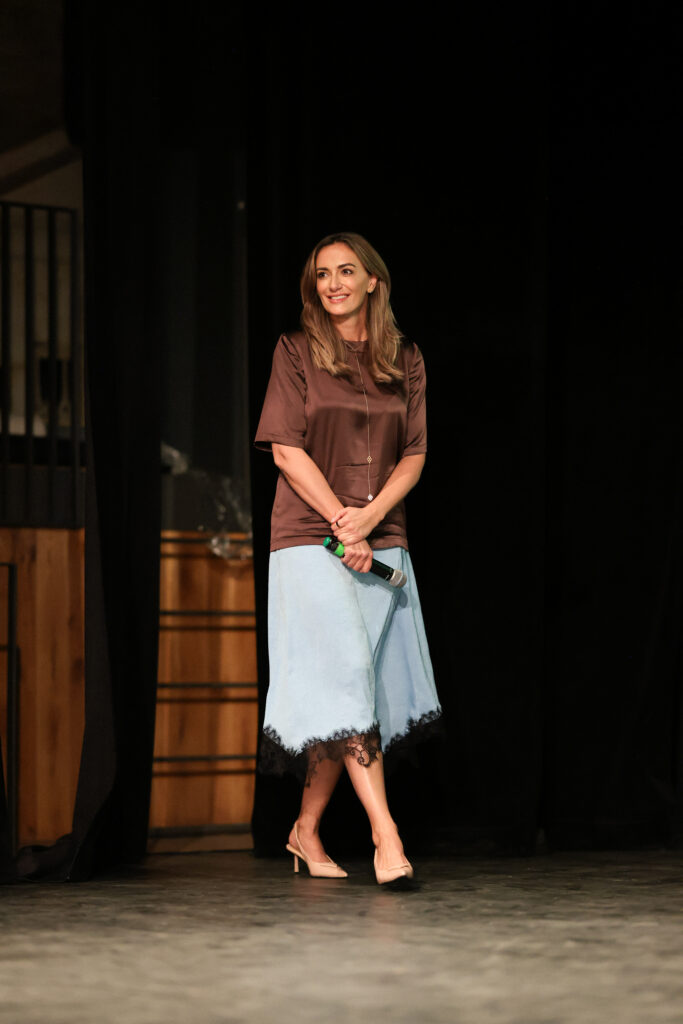
Keynote speakers and conference presenters
For a daytime conference, we generally aim for a polished, natural appearance.
Features need enough definition to register under stage lighting, but that doesn’t automatically mean heavier makeup.
In fact, too much dark eye makeup can make the eyes appear smaller rather than more defined.
It’s also important to remember that someone standing on a large stage may simultaneously be appearing in extreme close-up on screens around the room.
What looks effective from the back of an auditorium may be rather less flattering when projected onto a screen several metres high.
It’s a balancing act between stage presence and camera-ready detail.
Panellists and group discussions
With panel discussions, consistency becomes particularly important.
If five people are sitting together on stage, you don’t necessarily want one looking as though they’re attending a black-tie gala while everyone else looks ready for an ordinary Tuesday at the office… but that also doesn’t mean making everybody look the same as that’s dull and not very engaging, so we take a thoughtful approach to grooming and styling so that everyone looks appropriately prepared for the occasion and interesting to watch.
Awards hosts and evening presenters
Awards ceremonies tend to allow for a little more glamour as there’s often stronger lighting, a larger stage, eveningwear and plenty of photography so we can generally introduce more definition, more elaborate hairstyles or a slightly more polished finish.
But there’s still an important consideration: the person wearing it.
If somebody feels uncomfortable in heavier makeup, there’s little benefit in insisting on it simply because they’re appearing on a large stage, so the aim is always to support them and their performance, not leave them wondering whether they look ridiculous.
The biggest logistical mistake: not allowing enough time
One of the most common challenges we encounter isn’t the makeup itself; it’s the schedule.
Speakers are busy people. They have rehearsals, meetings, technical checks, and other commitments – often immediately before they’re due on stage – and occasionally, they miss their allocated hair and makeup appointment altogether.
I’ve worked on corporate livestreams where the preparation schedule was so tightly packed that one late arrival created a knock-on effect for everyone else. Without any flexibility, there’s simply nowhere for that lost time to go, and so it’s also essential to allow time between appointments to clean and sanitise tools, brushes and equipment.
That isn’t optional – Proper hygiene is part of providing a professional service, and it needs to be factored into the schedule.
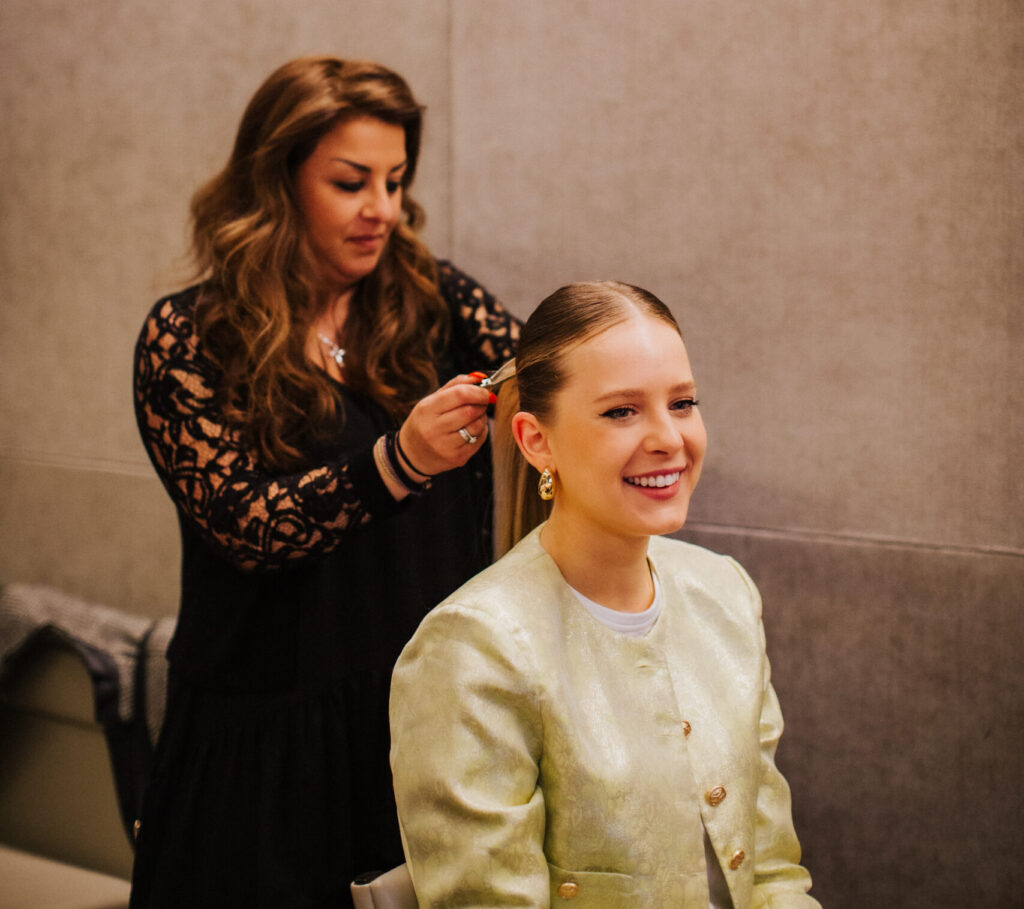
How long should you allow per speaker?
For a full preparation appointment, I would ideally allow around 45–60 minutes per speaker, depending on their requirements.
That gives us time to assess the hair and makeup, make adjustments, and allow the speaker to settle before their appearance.
Where schedules are particularly tight, we can provide shorter appointments of approximately 20 minutes for essential grooming, shine control, and touch-ups.
In those situations, we may ask speakers to arrive with their usual makeup already applied so we can concentrate on refining it for camera and stage.
It’s workable, but it’s not always ideal. So, my advice to organisers is to build some breathing room into the schedule – a few spare minutes between appointments can prevent a considerable amount of unnecessary chaos and stress – and if you’ve got several speakers appearing in quick succession, it would be more practical to book multiple artists rather than expect one person to perform miracles.
Similar considerations apply to filming days, which I’ve covered in our guide to planning hair and makeup for corporate filming.
Why a dedicated hair and makeup room matters
Another common assumption is that artists can simply move between speakers’ hotel rooms or dressing rooms throughout the morning.
Technically, we can… but repeatedly packing up products, equipment, and tools, moving to another room, and setting everything up again takes time.
Depending on the location and the amount of equipment involved, it can easily add a substantial amount of time between appointments. For a conference with several speakers to prepare, this very quickly becomes impractical!
A dedicated preparation space allows us to work efficiently, keep equipment organised and maintain a consistent schedule. It also gives speakers somewhere relatively calm to prepare before going on stage.
What should the room include?
Ideally, we’d ask for:
- Good lighting, preferably natural light, although we can bring additional lighting if required.
- Access to power for hair tools, lighting, and other equipment.
- Suitable chairs for speakers to sit comfortably during preparation.
- Mirrors, including a full-length mirror where possible, so speakers can check their overall appearance.
- A private, reasonably quiet space away from the main conference/event activity.
- Convenient access to toilets and running water, although a sink within the room itself isn’t essential.
It doesn’t need to be an elaborate backstage dressing room – a suitable meeting room or private space can work perfectly well – what matters is that it’s practical, accessible, and somewhere speakers can prepare without constant interruptions.
Check the venue restrictions before the event
This is particularly important when working in historic buildings, museums, galleries and heritage venues.
Some locations have strict restrictions on the use of cosmetics, hairspray, aerosols and other products, especially in rooms containing valuable artwork or historic interiors.
I’ve encountered this at the Royal Academy of Arts, where hair and makeup could take place in a suitable room from which the paintings had been removed, but not in certain other spaces.
At a recent conference in Croatia, the venue’s restrictions meant we couldn’t use the proposed preparation area within the heritage building. An alternative location was arranged for this particular event; however, it was approximately a 15-minute walk from the conference venue!
Now that might not sound that bad, but for speakers preparing for an early start, fitting in technical rehearsals and trying to arrive on stage feeling composed, it was far from ideal, so much so that two refused to come!
There’s also the matter of having to walk outside after having their hair and makeup done… wind, rain and humidity are far from ideal for a freshly styled hairstyle or makeup.
If your event is taking place in a heritage venue, please check the hair and makeup restrictions well in advance. And if an alternative space is required, consider how far speakers will need to travel and how that affects the wider schedule.
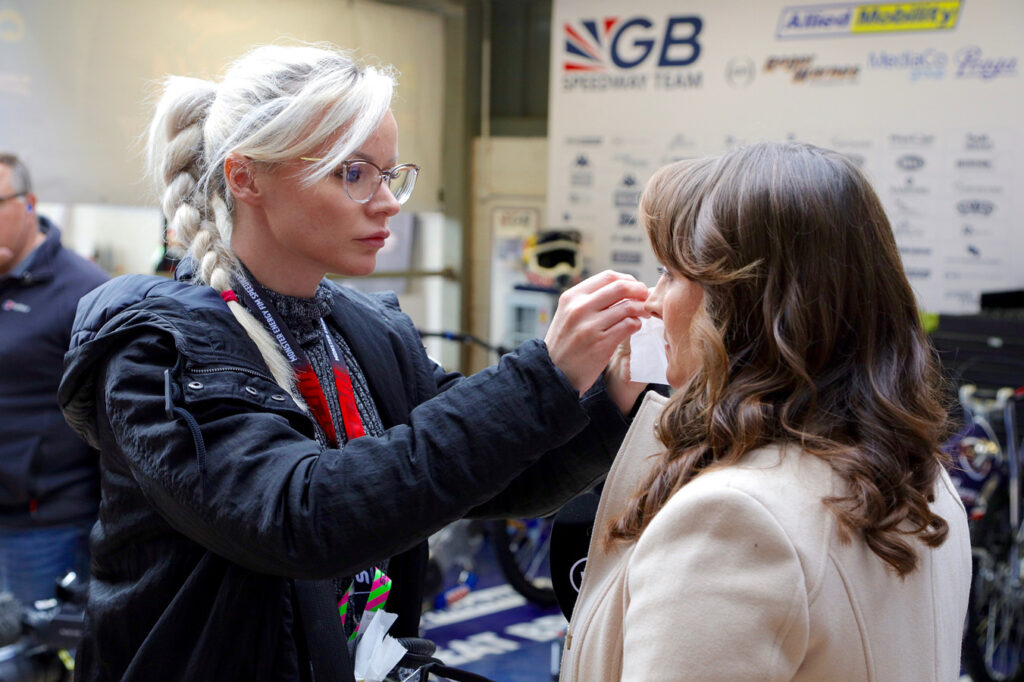
The makeup chair can be valuable preparation time
There’s one aspect of speaker preparation that event organisers often underestimate. It’s not simply about how somebody looks when they leave the chair; it’s also about how they feel.
At a recent international conference, I was preparing a speaker who had discovered that morning that the presentation equipment she was expecting wouldn’t be available. English wasn’t her first language, and she’d been relying on her slides and prompts to help structure her talk, and understandably, she was very anxious.
While I was doing her hair and makeup, we talked through the situation, her experience, and the options available to her. We discussed using prompt cards and how she could adapt her presentation without relying on the missing equipment. And by the time she left, she was in a much better frame of mind. She thanked me at the time and even reached out afterwards, as our conversation in the chair had helped her feel capable and confident of delivering her presentation despite the last-minute change.
This is another reason why, at CJC Hair & Makeup, I am big on personality and take on team members who are not only unflappable, but are able to fully support people.
Now, I’m not suggesting hair and makeup artists should be doubling as conference coaches, but after years of working with speakers, I’ve seen how useful that quiet preparation time can be.
Speakers spend much of a conference being approached, introduced to people, answering questions, and preparing for their appearances, and having 45 minutes in a chair, away from the bustle of the event, can be a welcome opportunity to gather their thoughts… or, in some cases, simply take their mind off them.
They leave not only looking polished, but feeling far more composed.
Should event organisers provide hair and makeup for speakers?
Sometimes speakers arrange their own hair and makeup, particularly when they’re travelling for an important appearance or have specific styling preferences, and at CJC Hair & Makeup, our corporate hair and makeup services cover everything from individual speaker preparation to larger conferences, awards ceremonies and corporate productions.
We regularly receive bookings directly from speakers, their personal assistants and representatives, and often these appointments take place in their hotel rooms before an event. If they’re nearby the conference venue, then great, but this is not always the case, and so there is some travelling time, and those pesky elements I mentioned earlier, to combat.
So for larger conferences, I think there’s a strong argument for organisers providing the service – yes, it’s an expense, but hear me out…
First, it helps create a consistent standard of presentation across speakers, presenters and panellists.
Second, it simplifies logistics – rather than several individuals making separate arrangements, the organiser can coordinate preparation around rehearsals and stage timings.
And third, it demonstrates that the speakers are being looked after.
Conference speakers are often giving considerable time and expertise to an event.
Some have travelled internationally, rearranged their schedules or spent weeks preparing their presentations.
Providing professional hair and makeup is a relatively small consideration within the wider event production, but it can make a significant difference to their experience.
And that experience matters. Why? Because speakers talk to one another.
They remember the events where they felt valued, well supported, and properly looked after….
And they also remember the ones where everything felt unnecessarily difficult.
A well-run speaker experience doesn’t just serve the speaker; it contributes to the reputation of the event itself.
Planning speaker hair and makeup for your next conference?
If you’re organising a conference, awards ceremony or corporate event, then my advice is to involve your hair and makeup team early enough for them to help plan the logistics.
We can advise on appointment durations, the number of artists required, suitable preparation spaces and how to structure the schedule around rehearsals and stage appearances.
It’s considerably easier to address these things in advance than to discover at 7am that the designated dressing room doesn’t allow hairspray and your keynote speaker is due on stage in an hour!
Professional hair and makeup should make the day easier, not introduce another logistical challenge. And when it’s planned properly, it does exactly that.
Corporate event hair, makeup and speaker grooming in London
CJC Hair & Makeup provides professional hair, makeup and grooming for corporate speakers, conference presenters, panellists, awards hosts and executives.
Our experienced team works with event organisers, production companies and individual speakers, providing on-location services in London and for events throughout the UK and internationally.
Whether you’re preparing one keynote speaker or coordinating a full programme of presenters, we can help you plan a practical, efficient hair and makeup schedule.
Get in touch to discuss your upcoming event.
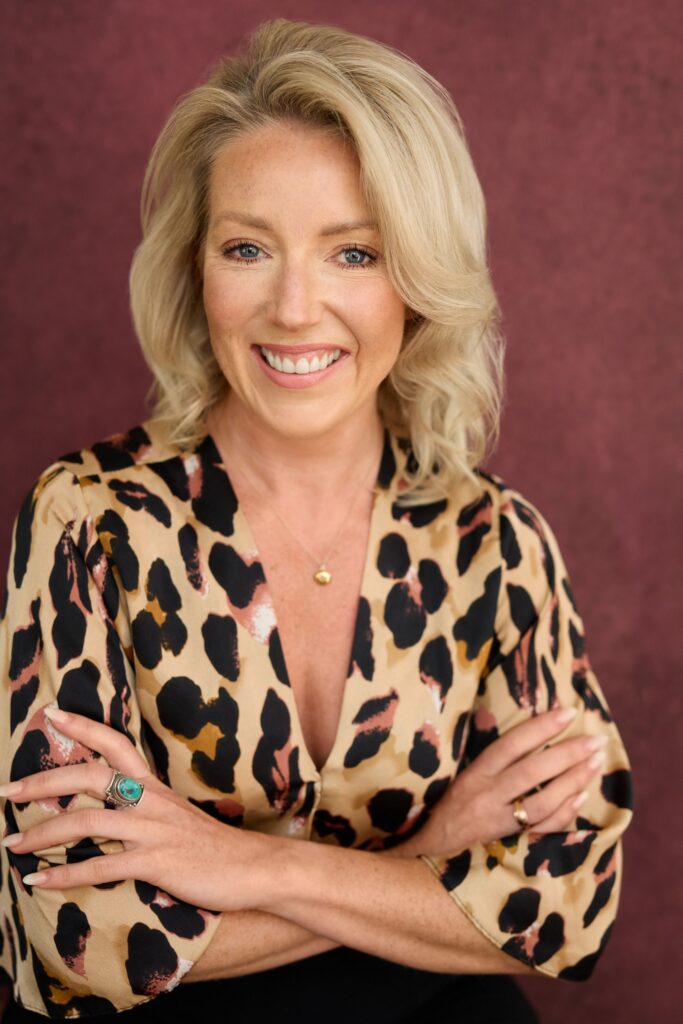
By Camilla Collins.
Camilla Collins is the founder of CJC Hair & Makeup, leading a team of experienced hair and makeup artists working across corporate production, weddings, events, TV, film and live appearances.
With more than 15 years of industry experience, Camilla specialises in the relationship between appearance, confidence and how people show up when it matters.