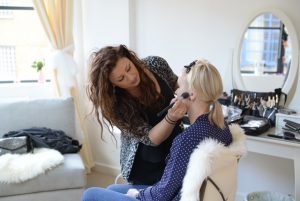
Ask most people what “camera-ready” means and they’ll probably talk about hair, makeup, clothes and looking polished.
After more than 15 years of putting people in front of cameras, I’d define it differently.
Camera-ready is a state.
It’s the point at which somebody stops worrying about themselves and feels ready to concentrate on whatever they’re actually there to do.
The hair and makeup?
That’s part of how we get them there.
The person who arrives isn’t always the person who leaves our chair
Somebody can arrive for a shoot looking perfectly presentable and still be nowhere near camera-ready.
Maybe they’ve slept badly.
Maybe they’re running late.
Maybe they’ve just come from a difficult meeting.
Maybe they’re about to deliver the most important presentation of their career.
Or maybe they simply hate cameras.
Then they sit down…
And one of the first things they often do is apologise.
“Sorry about my skin.”
“I’ve got terrible bags today.”
“I didn’t sleep well last night.”
It’s extraordinary how quickly perfectly accomplished adults start picking themselves apart when they’re sitting underneath bright lights staring at their reflection.
That’s where our work begins.
And no, it’s not with moisturiser, primer or foundation… It’s with conversation.
Because sitting in a makeup chair is surprisingly vulnerable
I remember this from makeup school back in 2009.
We practised on each other, which meant spending hours sitting completely barefaced in front of a mirror while somebody stared very intently at our faces and we had no choice but to stare back at our own.
And I started noticing things I’d never noticed before.
Is that eye wonky?
Has my skin always looked like that?
Where did THAT come from?
It’s quite confrontational when you’re not accustomed to it.
This is why I think one of the most underrated skills of a brilliant hair and makeup artist has nothing to do with makeup.
It’s reading people.
Sometimes we talk. Sometimes we shut up.
There isn’t a standard CJC “confidence conversation”. – That would be unbearable for both parties!
Somebody who’s anxious may need distracting.
Someone else may want to talk through what they’re about to do.
Somebody may need a laugh.
Another person needs the room to go quiet for ten minutes so they can gather their thoughts.
Occasionally somebody arrives with very nervous, frantic energy and needs bringing down.
Someone else could arrive exhausted, flat, and need lifting up.
You have to meet the person where they are.
And that’s why personality is one of the biggest things I look for when hiring for the CJC team.
I can teach technique, but it’s much harder to teach somebody how to read a room.
Corporate talent is different from professional talent
There’s a significant difference between preparing a model for a campaign and preparing a CEO for an interview.
The model does this all day and they’re there to fulfil the brief.
Professional actors are accustomed to stepping into a character, being watched, repeating takes, and having people constantly adjusting them.
Your CEO probably isn’t.
Neither is your lawyer, founder, employee, or conference speaker.
They’re usually appearing as themselves.
And quite often they’re talking about something that’s extremely important and something they care deeply about: their company, work, ideas, or expertise.
There’s more of them on the line.
And that’s why the person sitting in our chair matters just as much as the face we’re working on.
Hair and makeup can change your state
We’ve all experienced some version of this.
You don’t particularly feel like going to the gym… Then you put your gym clothes on and something changes.
You’re still exactly the same person, but your brain has apparently received the memo:
“Oh, OK, We’re doing this now.”
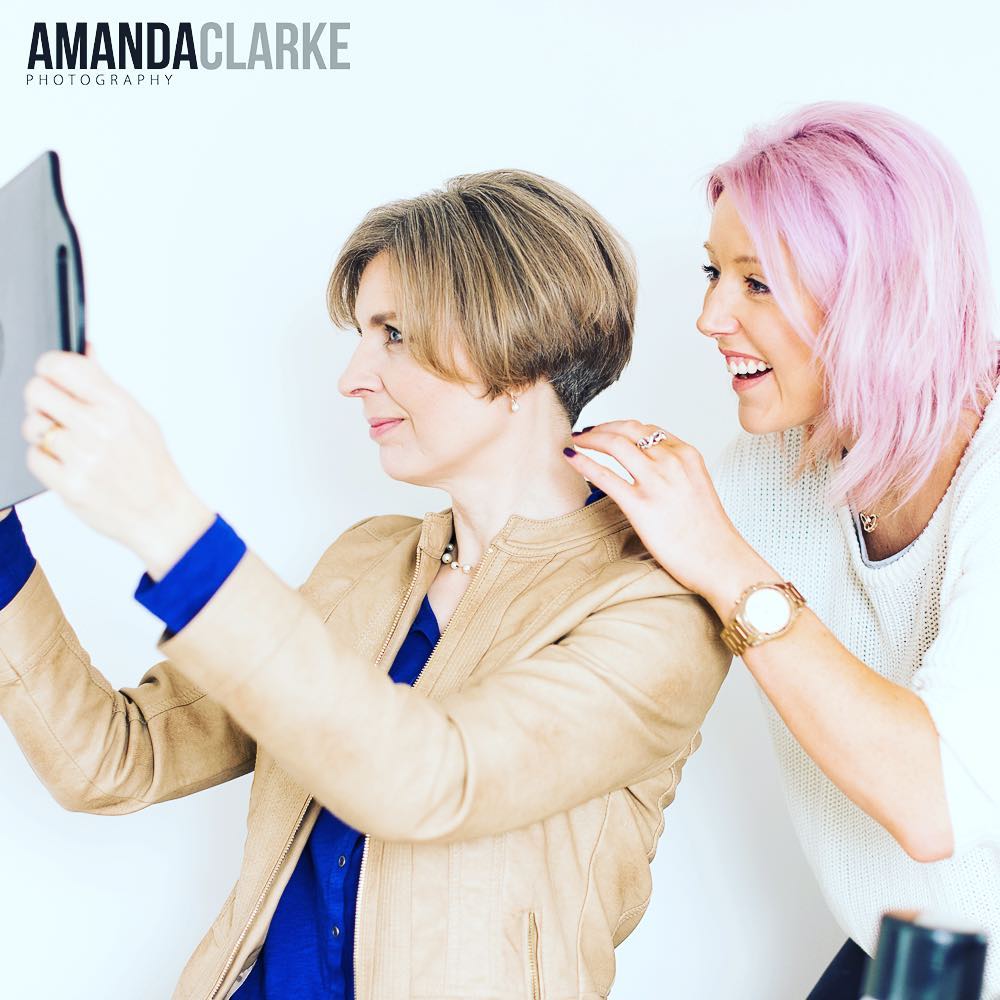
Hair and makeup styling does something similar.
You might wake up feeling tired, put yourself together, and suddenly feel considerably more capable of facing the day.
We’re not creating confidence from nothing, we’re simply reminding somebody of the confidence that was already there.
As the hair comes together and the makeup goes on, they start seeing the version of themselves who is about to do the thing.
And you can physically see it happen.
They start smiling more… their shoulders drop… then their posture improves… they make more eye contact… they talk differently… and when we’re done, sometimes they practically float out of the chair.
But the aim isn’t transformation
This is important.
Particularly in a corporate setting, our job is rarely to turn somebody into someone else. We’re not putting a mask on them. We’re removing the little things that might make them feel self-conscious and polishing what’s already there.
If you’re somebody who doesn’t usually wear makeup, being covered in it isn’t going to make you more confident.
You’ll spend the entire interview thinking:
Do I look ridiculous?
That’s the exact opposite of camera-ready.
So we’ll explain what we’re doing.
We’ll ask questions.
We’ll start gently.
We’ll check that you’re comfortable.
Because how somebody feels about how they look matters more than whether I personally think another touch of blush would look fabulous.
Looking camera-ready also serves the audience
There’s another side to all of this.
Professional hair and makeup isn’t solely about making the person in front of the camera feel better… it’s also about the person watching.
When someone’s face fills a screen, small visual distractions become considerably more noticeable.
Excessive shine.
A flyaway.
Uneven skin tone.
A distracting blemish.
Hair sitting… erm… well, oddly.
But a camera isolates details in a way ordinary human interaction doesn’t.
While none of these things make somebody less credible in real life, if your viewer starts concentrating on something irrelevant, they’re no longer concentrating on your message.
So our job is partly to remove that visual noise – not to make somebody perfect – to help the audience listen.
Speakers need something slightly different
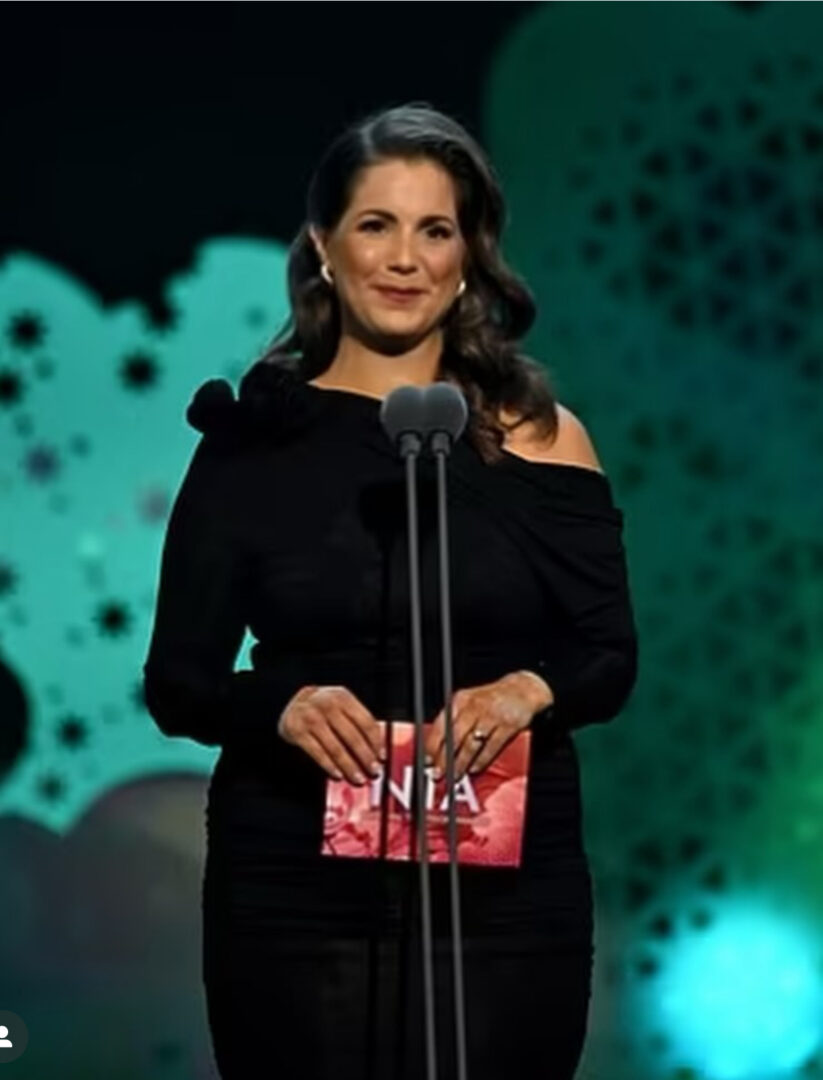
When we’re preparing somebody for a conference or stage appearance, there’s another dimension.
The person needs to work in several environments simultaneously.
Their features need enough definition to carry under stage lighting and potentially across a room.
They may also be filmed or photographed and afterwards they’re probably going to stand two feet away from somebody while networking, so they need to look right from the back of the room, through the camera and in real life.
But again, the most important part is that they walk towards that stage feeling like themselves.
Powerful.
Polished.
Credible.
Ready.
The makeup chair can be the calmest part of somebody’s day
This is what some production teams sometimes underestimate.
If you’re preparing for a big interview, keynote, livestream, or filming day, you’re probably doing a hundred things…
Then somebody tells you to sit down.
And for the next 20 or 30 minutes, you can’t run around solving problem…
Someone else is taking care of you, you get to stop, and sometimes that little pocket of time is so valuable.
It’s why I don’t see our artists as people who simply arrive and “do the makeup”. I see us as the first people preparing the talent at the beginning of whatever comes next.
How that person leaves our chair matters a great deal.
So what does camera-ready actually mean?
To me, it means the outside and the inside have caught up with one another.
Your hair works.
Your makeup works.
Your clothes feel right.
You know what you’re there to say.
You’ve had a moment to settle.
And you’re no longer wondering whether there’s something on your face, whether your hair looks weird, or whether everybody can see how tired you are.
You’re present.
You’re ready for your close-up.
And you remember who the hell you are.
Now that’s camera-ready.
Preparing somebody for an important moment?
CJC Hair & Makeup provides professional hair and makeup for executives, presenters, speakers, filming, conferences, headshots and events across London, the UK and internationally.
Whether you’re organising one person or an entire team, we’ll make sure the people you’re putting forward feel as ready as they look.

By Camilla Collins.
Camilla Collins is the founder of CJC Hair & Makeup, leading a team of experienced hair and makeup artists working across corporate production, weddings, events, TV, film and live appearances.
With more than 15 years of industry experience, Camilla specialises in the relationship between appearance, confidence and how people show up when it matters.